Plates on the back, ferns in the bite
Stegosaurus
A Morrison plant-eater with a stronger bite than its skull suggests.
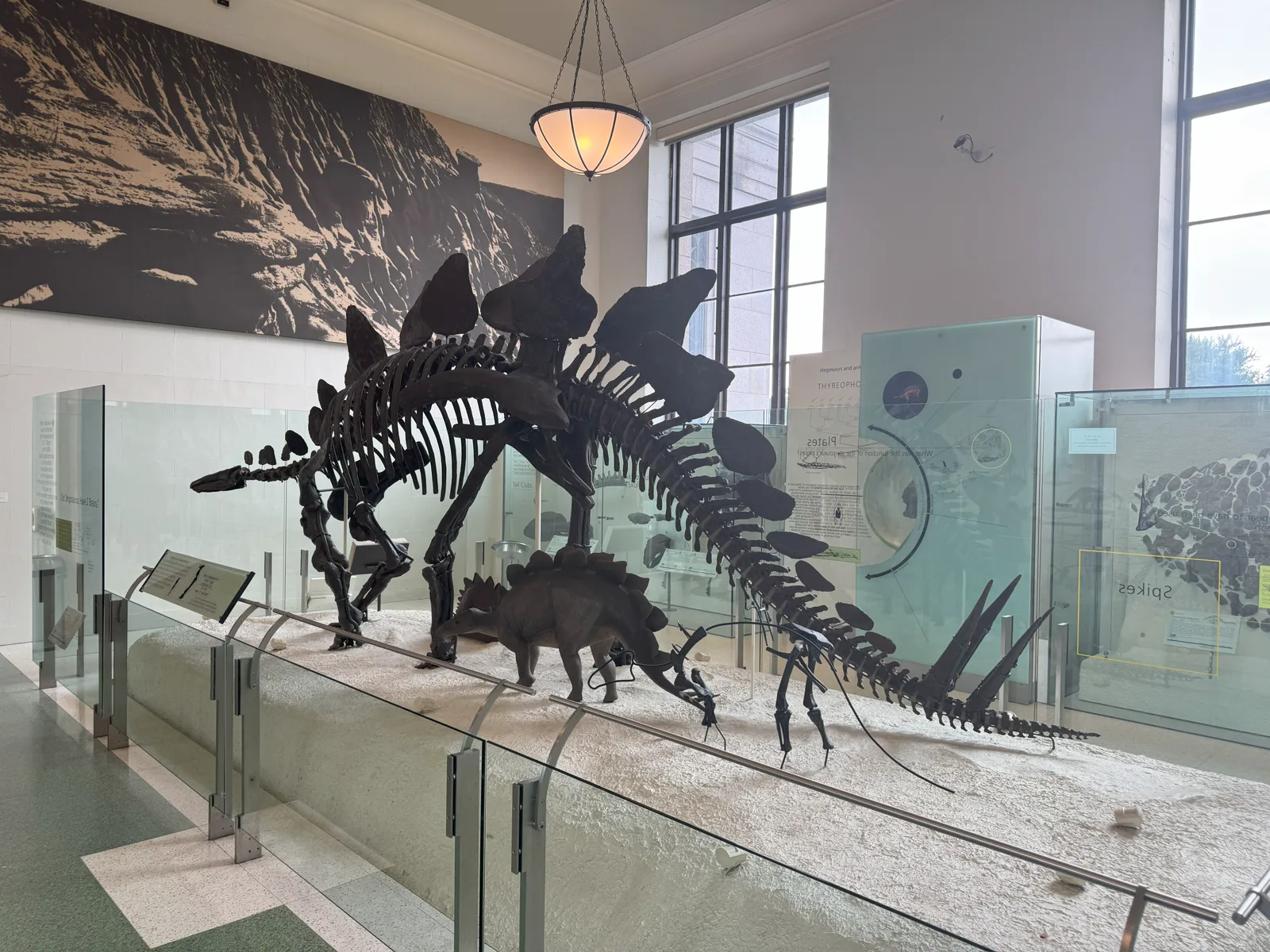
Stegosaurus mount at the American Museum of Natural History, New York, with a smaller model in front. Vicpeters, CC BY 4.0, via Wikimedia Commons. The original photograph is 5712 × 4284 pixels. This page serves that full width, plus 2560 and 1600, not enlarged. The file page does not give a specimen number. File page

Stegosaurus stenops is a plated dinosaur from the Morrison Formation of the western United States. The photograph is a mount at the American Museum of Natural History in New York, with a smaller model in front of it. It is not the type skeleton, and the file page does not give a specimen number.
Timeline
- The Paleobiology Database records the type skeleton, USNM 4934, from Felch Quarry 1 at Garden Park, Colorado, in the Morrison Formation, and lists the age as Late Kimmeridgian. It cites Marsh, 1887, for the name Stegosaurus stenops. Paleobiology Database — Felch Quarry 1
What we know
- A 2016 study of the Natural History Museum in London’s Stegosaurus stenops skull, reported by that museum, found a bite about as strong as the bite of a sheep or a cow. The same account says the jaws could crop ferns and cycads, a wider menu than the more tender plants inferred for Plateosaurus. The London skull is not the New York mount in the photograph. Natural History Museum — Stegosaurus feeding
What we don’t know yet
- What the plates did. The sources used here are about the quarry and about feeding. They do not test display, defense, or heat. This page does not pick a job for the plates.
- Which animal the New York mount is. The file page says Stegosaurus and does not say stenops or give a catalog number.
- A coordinate printed by Marsh. The map points are Paleobiology Database locations for Felch Quarry 1 and Bone Cabin Quarry, not readings from the 1887 paper.
Its role in Earth’s ecosystem
The London study is the feeding evidence. Stegosaurus stenops had a strong bite for a dinosaurian plant-eater and could take ferns and cycads, not only soft leaves. In the Morrison floodplains that is a mid-height to low plant-eater with a different bite from the other herbivores in the same computer comparison, Plateosaurus and Erlikosaurus. Natural History Museum, London
The tail spikes are on the New York mount. These sources do not show a spike wound in another animal, so this page does not claim a predator that those spikes stopped.
Sources (4)
- Paleobiology Database — Felch Quarry 1, Garden Park
- Paleobiology Database — Bone Cabin Quarry
- Natural History Museum, London — what the Stegosaurus skull could bite
- Wikimedia Commons — the hero photograph, CC BY 4.0
Where the fossils are
Each icon is this dinosaur, drawn for this site. It sits on a fossil locality as that place is today.
These icons mark fossils on today’s map. When the animal lived, the continents were not in these places.